The Power of Metal: Mike Schleibaum Discusses Festivals, Family, and Darkest Hour’s New Album

 iHeartRadio
 Amazon Music
 Audible
 Spotify
 Pandora
 Apple Podcasts
 Spreaker
 Overcast
 Castro
 PocketCasts
 Podchaser
 Deezer
 Podcast Addict
 RSS Feed
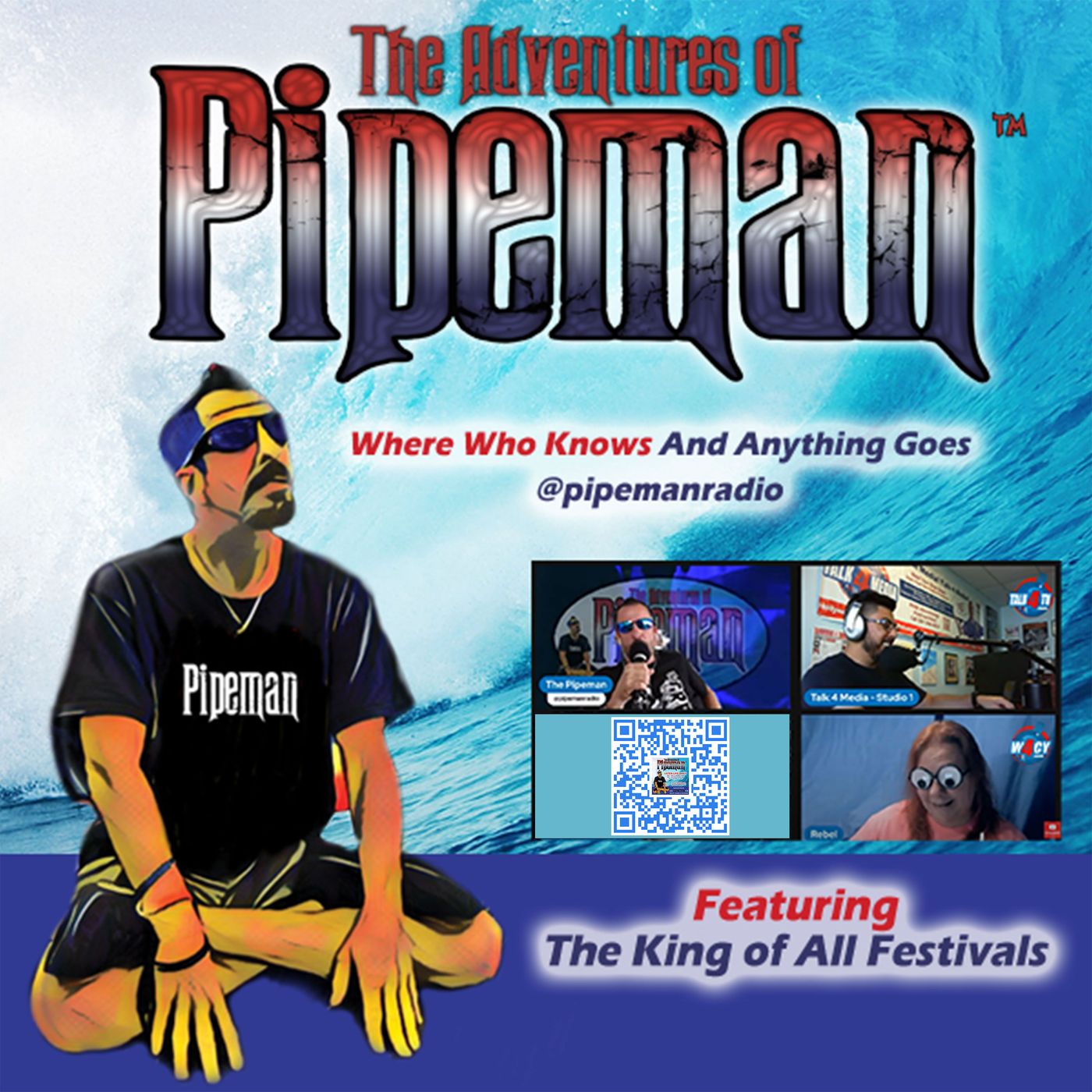
 In this episode of "The Adventures of Pipeman" on W4CY Radio, Pipeman sits down with Mike Schleibaum from Darkest Hour. They delve deep into the legacy of heavy metal festivals, the evolution of the metal scene worldwide, the importance of community in music, and the meaning behind Darkest Hour’s latest album, "Suffer Divine". Lively stories from decades on the road, reflections on multi-generational metal fandom, and honest discussions about music, suffering, and resilience abound in this engaging, insightful conversation.
Main Topics Covered
- The irreverence and authenticity of metal interviews and band names
- Memories from legendary festivals like Dynamo, Wacken, and Ozzfest
- The growth of metal festivals in America and Europe
- Importance of DIY and small-scale festivals
- The evolution from punk/metal divides to a unified heavy music community
- The role of heavy metal as a source of community, identity, and even therapy
- The generational shift—metal as a family affair
- Deep dive into Darkest Hour’s new album "Perpetual | Terminal": themes of suffering, resilience, and hope
- The relevance of meaningful lyrics and songwriting in metal
- Upcoming tour dates with Fear Factory
- Mike Schleibaum shares why he often uses playful pseudonyms on interviews and how the heavy metal scene keeps things fun and light-hearted for musicians and fans 00:48.
- Mike Schleibaum reminisces about playing huge festivals in Colombia, watching Iron Maiden from afar, and the passionate heavy metal culture that transcends borders 03:35.
- Stories from his first European tour with Battery at Dynamo Festival: experiencing Pantera live and trading beer for soda with Cathedral 06:05.
- The significance of small, local DIY festivals for scene and band development 08:01.
- Discussion on how American festivals are taking cues from European ones, with festival organizers like Wimmer learning from events like Hellfest 05:13.
- Both speakers reflect on the unifying power of metal, mosh pits, and how the genre creates a community that crosses age and generational boundaries 14:35, 23:01.
- Anecdotes about Pipeman attending festivals with children and grandchildren, underlining how attitudes toward metal in families have changed 22:59.
- Mike Schleibaum tells the story of playing with Exodus and unpacks the "kill posers" mentality vs. today’s more inclusive scene 16:16.
- Evolution in metal vocals and genre boundaries—how what was once “crazy” or “inaccessible” is now mainstream 18:38.
- Discussion on the album’s title, with themes of suffering, resilience, and turning pain into personal growth 27:31.
- Mike Schleibaum shares insights from his background in social work and how that informs the album’s more hopeful, universal, and relatable lyrics 27:38.
- "Words have power, so we got to try to watch how we use them." — Mike Schleibaum 02:30
- "The point of the music is to build a community around it, you know?" — Mike Schleibaum 15:03
- "Metal will protect itself. It will always stay what it is even though it's universal, and it will grow." — Mike Schleibaum 17:34
- On suffering: "Pain is something you feel immediately… but suffering is what happens after pain. And that is the thing you can control. I think that's at root of the meaning of the record." — Mike Schleibaum 28:48
- "Mistakes have given us scars that give us color, that make us have personality." — Mike Schleibaum 31:12
- Darkest Hour’s New Album: "Perpetual | Terminal" — drops on the 30th, available for pre-save 31:43
- Upcoming US Tour: Shows with Fear Factory (Midwest dates in November), with plans for more touring next year 31:55
- Festivals Referenced:
- Find Darkest Hour: Follow on streaming platforms and social media for updates.
- Listen to more episodes of The Adventures of Pipeman on W4CY Radio.
- Mike Schleibaum of Darkest Hour for sharing his stories and insights.
- The global metal community for keeping the scene alive, diverse, and ever-evolving.
Become a supporter of this podcast: https://www.spreaker.com/podcast/the-adventures-of-pipeman--941822/support.
Click Here to Subscribe for PERKS, BONUS Content & FREE GIVEWAYS!
Follow @pipemanradio on all socials & Pipeman Radio Requests & Info at www.linktr.ee/pipemanradio
Stream The Adventures of Pipeman daily & live Mondays, Tuesdays, Wednesdays at 1PM ET on W4CY Radio & Talk 4 TV.
Download, Rate & Review the Podcast at The Adventures of Pipeman, Pipeman Radio, Talk 4 Media, iHeartRadio, Apple Podcasts, YouTube & All Podcast Apps.
0:05 This is the Pipe Man here on the Adventures of Pipe Man W4CY radio. And I'm very excited about our next guest because their music is killer, but their new music is even more so. So we're going to check that shit out. So we're going to welcome the dude that's behind all that from Darkest Hour. How are you? What's happening? Mike Schleib, I'm here. Let's hang.
0:46 I like how you named yourself the dude. Oh, yeah. Like, well, it's so funny because I do like so many of these, you know what I'm saying? And a lot of them. they nobody's paying attention to anything like they don't care like you're just logging into a zoom thing that people are recording so i always put like a funny name on there i love that no one is like who cares like it's like this is not a real job this is heavy metal so you know so yeah so now i know it's being broadcast so luckily i didn't put anything with any cuss words in it so i kept it clean. But that that would be i'll take the dude that's perfect That would be cool, too. But it reminds me.
1:28 It is funny, though, because one time when the first time I ever interviewed August Burns Red. So I said to him before the interview, it was at a festival in person. I'm like, I'm asking stupid questions like, how did you get your band name? And they're like, well, you're lucky because see that girl next to you? She asked us if we tell a different story every time and we just fuck with people. Yeah. Well, we don't. We had we had our era where we did that. Actually, we had an era where we did where we would just crazy misinformation. And we learned that that was really like a bad idea, actually.
2:10 because it's pretty hard to like walk things back that you make up that are crazy so you know this is the closest I get to having fun right here I just put my name as the dude. I know right especially 2026 like everybody will take everything you say like to heart like it actually was real well you. Know words have powers so we gotta try to watch how we use them you know what I'm. Saying that's why metal is so important to the world in my opinion because I think Heavy metal and mosh pits would cure all the world's problems. I mean, I love that South Park where Van Halen solves the crisis in the Middle East or whatever. Because it's like, dude, when that aired... I just want so many people to be like, this is for you. Oh my God. And it was just like, out of nowhere, they use Van Halen in that episode. And so like, I also believe that heavy metal can be a great unifier.
3:08 And I also think it's important as an artist to say what you think in your music. And sometimes those things can get at odds with people, but in general, you know, as long as you stay true to, you know, the basics of heavy metal, which are that we're all here because we love it, and that's what's getting everyone in the room at the same time, then usually most things can work forward from there. And we just played in Columbia and Bogota at the Rock El Parque Festival. It was crazy. There was like half a million people were there over the weekend. Iron Maiden played in the arena next to the fairgrounds. We played whatever you'd call it.
3:51 It was one of the biggest shows ever. you know, that we've ever played as a band. And it was just insane to see this many people and they love heavy metal. I mean, not even just at the festival or in the Iron Maiden concert, we're talking about like 20 blocks away where you could still hear the Iron Maiden concert. Everybody's having a block party and they're moshing to the music that they're just hearing in the air miles away. And it's just like, it was such a good, like inspiring reminder of like, how universal like heavy metal can be by going to Columbia, because here in America, a lot of things sort of move on trends and, you know, you kind of have to fight through that if you're a lover of all things, heavy metal. And it's really nice to go to a place where it's like so ingrained in the network of the culture that you can play live on network TV, which is what we did when we were there. We were just on network TV playing heavy metal and you know what people like it. So same thing happens when you go to Japan and, feels pretty good same way in scandinavia and germany and so it's it's nice to get that because here here in america it's a little different but also you know the american metal scene is very special in its own way so you kind of you have to take the good with the bad and every scene you're in you know.
5:08 I think it's getting better because we're taking cues from europe you know like i find like i i do festivals all over the u.s uk europe and A lot of the American festivals are starting to become more like the European festivals. And that's because Wimmer actually goes over to Hellfest to do research. Well, we've been playing the European festival circuit for over maybe two decades. I mean, we're 31 years old. It could be two decades. It could only be one decade. They're both impressive, but two decades sounds more. So either way, it's become... I don't know. I want to say it's in a strange way, like part of my life. Like I turned 21. I'm, I'm, I'm about to be 50 next year. I'm just going to tell listeners because I don't think we shouldn't age shame being into heavy metal.
6:03 That's one things I love about it. You can life into it. But I was 21 when I was played my first European festival tour with the first band. I was in this band called battery. It was a hardcore band. I joined it. because I was the best mosher in the room. And they were like, well, we need another guitar player. Get that guy. And I went on my first tour with them over the summer of 99. I turned 21 and we played the legendary Dynamo Festival with the legendary performance of Pantera where Phil Anselmo's completely hammered and calling out people's t-shirts. And I saw that in real life. Cathedral played. They shared a dressing room with us.
6:46 It was wild. We traded them soda for beer because we didn't drink. And then later, people kept bringing us cases of beer. Like, you know, from down the hall, here comes some dudes from Death. Death played. You know what I mean? Oh, wow. They had white, I remember, white jeans. And I think Cradle of Filth might have been there. I mean, the main stage was insane. Okay? And also, I want to say that Ugly Kid Joe played with um the singer no no no no wait life of agony played with the singer from love ugly kid joe wow you can't even make that type of shit up i remember but anyway uh i think my point is it just feels like european festivals they're so special european metal and hardcore kids can grow up going to these things camping and connecting making memories it's so awesome it's so special and we're just catching on to it here and so we we've known about it for, like I said, over a decade or whatever about how special it is. And that's why we keep going back to Europe for the summer festival seasons. And when we do come to the U S there are cool things here and there are cool festivals, no doubt. And I do want to say, since we're on this topic, shout out to the party weekend festival that we just played in the Daytona, Florida, because I want to say that the smaller DIY festivals that happened in America are are really special. Like when a promoter
8:18 who is not live nation or whoever doesn't, doesn't get an amphitheater, but gets maybe like more of a non-traditional space and throws a festival that maybe gets a thousand people there or whatever, but can have these younger bands who maybe are not going to get on these bigger festivals and it, and it becomes a mini festival culture and it can help, you know, economies in small towns and it can help scenes grow and it can help young bands grow. And so, I think it's important to recognize that when you're talking about festivals, that the smaller ones are sometimes just as important to bands, careers, scene building, community building as these bigger ones. And it can be even more unique and special, you know, so it's important to enjoy them all. But hopefully I can agree. We'll have a little more.
9:05 You know, I can agree with you more. And I'm glad you brought that up because I'm in South Florida. I would. been at that one i think i was at aftershock when that was happening but uh all. Right well this was a little smaller than aftershock. But but i liked it i like the vibe i like the vibe and like i was even thinking about this year when i was at valken i was like it's hard to imagine that 35 years ago that that was like, there was one spot I was standing with somebody that that was the festival, like that little spot. Well, I want to tell you before Vakan, there was Dynamo. Yeah. Okay. And, and, and the Dynamo was a festival I was talking about earlier.
9:46 That was when I, that was life-changing by the way, Pantera played that Dynamo. We were parked next to them. It was wild. Seeing Dimebag Darrell in real life and shit in the 90s. Just being able to say you did that was pretty crazy. But, you know, as far as like turning that into like where we're at now with like all the festivals and all the things moving in that right direction, you know what I mean? I just think it's cool that like we can all kind of learn and grow these little scenes together. You know what I mean? Yeah. You know, what's a trip to me is okay. So I used to go see Metallica and Slayer when they'd have like 25 people at a little club in LA, you know, before even the Bay area. And you talk about a festival in Columbia that had a half a million people. And I'm just thinking anybody that thinks that metal died, man, they need to go. go check this shit out because like, I could never imagine a half a million people into metal when I was a teenager.
10:53 Well, but, uh, but yeah, I mean, the thing is they wasn't on all metal concerts. That was what was so special about Columbia is that you had all different types of music. There was this band, Tokyo, Scott, Paradise Orchestra or something. They were a Japanese ska band. There was all types of music. The bands that played before us were legendary Colombian punk bands. We didn't have one note, but people were losing their minds. Nice. The point I was making earlier about Dynamo was then Wacken came along because Dynamo died. Darkest Hour played Wacken one time and it was... It was also a surreal experience because although we had played Hellfest a few times before Hellfest has become a mini city.
11:45 Another one. Yeah. There's nothing like Vakan in the world, you know, and like you said, it would be crazy to be in that one spot. And it was crazy to be at Dynamo when we were there and not knowing that it was the end. You know what I mean? It felt like it was the biggest festival of all time. And then it was almost done. I don't even know. if there was even a dynamo after 99 or if there was one later, but like it's, you really have to like take these things and cherish them. Like, like that hell fest does exist. And it's this big that Bakken does. I love hell fest. Cause it taken so much to grow these festivals and these things and this culture to get it to be that point. You know what I mean? And yeah, it's really good. And it's really good for heavy metal and metal music for sure.
12:32 Well, they have now, like, they have Dynamo in the Netherlands, but that's not the same one, right? No, no, no, no, no. Nothing the same. And then also, we need this in America. So let's go. You know what I mean? We had OzFest. We did that in 2004. And that was life-changing. That was sick. You know? And Ozzy, RIP. But you know, like, like you said, you know, you saw some killer bands back in the day. Well, let's go Metallica. It's time for you to have Metallica Fest and bring the young bands, you know, like Ozzy did, you know, shit like that. That's what we need. Well, that's like, um, Zach Wilde just did that Berserker Fest, which he did. Yeah. Which is pretty cool like that.
13:13 And there's a fest I heard of too, speaking of Pantera, uh, that I found out during an interview at Aftershock with, uh, there's one in Louisiana coming up. Oh yeah. With acid bath. I saw that too. Yeah. Well, you got also, you have like Pantera down, all the bands of the dudes in down, their bands are playing like that. That's how it came up in the interview is like, like everybody in those bands, their own bands are playing. It's like one big family of bands playing at this thing. Yeah. I mean, we, we have that style of vibe here in Washington, DC too. Like I play in other bands and everybody in this band has played in other bands around town. And so it's pretty awesome and unique that in Louisiana, it's those bands, you know what I'm saying?
14:03 But it's cool because it's the same idea, you know, and it's really this idea of scene and community, which I have been talking about a lot in some of these interviews about how like First, I think that the biggest lie I've been told to everybody is that this music was for when you were like in your adolescence. It's actually, you need heavy metal and punk and hardcore and stuff in that community around it more when you're older, because when you're older, you're not dead yet. And also, what do you do for fun? The same shit that you were into when you're still into it. So it's like, you know, you need it and I need it. I need to go out. I need to go on tour. I need to play shows. I need to make music. I need to hang with my friends. I need to drink. I need to party. It ain't over. You know what I mean?
14:46 I'm with you. You definitely need this. And the second one is more about heavy metal, I guess, in a broader sense, in that its biggest job is to build community. I feel the same way about punk and hardcore, too. The point of the music is to build a community around it. And that's why the people are there when you keep playing, when you come back. And that's why the local bands keep you know, coming up and sounding like other bands and then growing their own scene. And it's like, that's why that whole circle keeps, you know, turning around. Well, that's why I love about like more than anything else, you know, because I was in that whole eighties LA metal scene where, you know, before Slayer and Metallica went up to the Bay area. And then I went up to the Bay area because I couldn't stand LA anymore. And, you know, and it was always cause of community. Like I fell in love. I always loved metal music, but I fell in love with metal because we're like one big family and you go to festivals or concerts and like, there's a commonality there and all the outside world bullshit doesn't even matter. And, you know, and that's why I love about today more than then though, is that hardcore punk metal is all one community instead of what I grew up in where I Oh, I was a long hair.
16:11 I couldn't go to a punk show and vice versa. Okay. This is funny. I'm, I'm a hundred percent with you, but I had the, um, the joy and the luck of getting to join Exodus for like six days. I got to play bass with like, and they are from the, like, they're literally like the kill posers band. Oh yeah. A hundred percent. So it was like really funny to like, kind of get into this and be like, like, Oh fuck. Like, dude, like, I mean, they're like, you know, the toxic wall style, like just, um, you know, just friendly, violent fun, you know what I'm saying? That's our whole thing. I was like, shit. But, uh, I, I, I don't know. I think, you know, there's a lot of stuff I love about like, sort of the the era of you're talking of sort of the era before my time i feel like like because i love this is this is the year i'm a fan of though because i grew up loving all the 80s rock bands all the hair bands watching them on mtv falling in love with guitar that way falling in love with thrash through tape cassettes.
17:14 You know what i mean no doubt. There there's something that's just like I don't know. It's like kind of weird. It's like tribal and in a weird way, but it also, I love how like heavy metal can protect it. It can be universal, but it can still protect itself. You know what I mean? And I think that's like the inherent sort of good quality of the sort of Paul Bostaff kill posers idea ideology is that it's more, you know, it's more about like, like metal will protect itself. It will always stay what it is, even though it's universal and it will grow. And I, you know, our band is sort of that way too. Like when we started this band, we had these crazy vocals. People would be like, Oh man, I love the sound of your band. It's rad. But you should like get a new singer who like sings, man, because this is crazy. And now through the existence of our band, like, this is what heavy metal now sounds like.
18:13 I mean, even when we added like clean singing, which sounds hilarious because we had this crazy singing, everybody thought sounded nuts and like nobody was going to listen to. And then when people started liking that and we added some melodic singing, people thought the idea of having a band that had both of those was nuts. And now, you know, everyone from Gojira to Mastodon to everybody's favorite new modern metal band, it has range in the way they sing vocals and heavy metal singing has developed so much that it's like, music has come around to us. You know what I mean? The same way we stayed where we were, we protected the main identity of what we were doing. And, you know, now the greater idea of what heavy metal is, is basically, you know, are we metalcore or are we just heavy metal? I mean, who knows what the difference is in 2026, you know?
19:03 And in some ways, I think that's an underlining sort of just like, kill-posers mentality that Exodus has, which is that they're like the old guard of thrash metal. Like, even while a lot of their other contemporaries, and I do consider Metallica, Slayer, Megadeth to be contemporaries. They all were, yeah. Of Exodus. I don't think that they're not in some category because they weren't in these four that people picked, you know? Yeah, the big. Four thing was manufactured bullshit because there were so many thrash bands that were on the same level. And to me, Exodus now is killer. Can crush some of those big four bands. And I don't want to get too in trouble on here, so I won't. drop a name but the energy and the it's like it's electric it's like molecules molecules change in the room when Exodus plays and for me like getting to see them getting to be around them it was like holy shit like this is the way Like I had seen snippets and seen flashes of light, but now I've seen like, okay, you know, and it mirrored so much of things that were true and similar to darkest hours past and the way that we operate that some of those things, I guess, really resonated and stayed with me. And I think about it now because not only is that band part of
20:33 the DNA of me discovering thrash when I was a kid, but now later on sort of like navigating, the continuation of doing a band that's three decades. Old, you know? Well, you know, first of all, say it's funny that you say about the poser thing. Cause my battle vest, which I bring for interviews to festivals is it's from that time. That's the original Exodus logo on it. Yeah. It tells you how old it is. And, and, uh, I have a big thing, no posers with a line through it. Yeah. For the record, I'm all about being inclusive. So I, I don't use the term poser and never had it and could have easily been called a poser many times in my life. So I will wear with pride because you know, you need to experiment people. So don't be afraid, but.
21:23 Also I know how it goes. I know. Oh man. But, uh, Let me tell you something, though. It was a wild time. I was at the first crossover show ever where there were punks and metalheads in one place at the same time. No security. No security at an Elks Lodge. Yeah. I went to Slayer and sick of it all in Washington, D.C. Let me tell you about In the 90s when the two styles of moshing converged and that was what the, it wasn't a feud really on music because I think that really hard, the hardcore and the metal kids, they all sort of like liked both bands.
22:04 Everybody liked Slayer. But you weren't allowed to back in the day. Yeah. And the way that the hardcore kids would dance is sick of it all. And the moshing, it was just, it was, it was a wild time to be around that. And it was, it was very physical and everybody didn't have a camera. So people got away with a lot more and it was just, you know, a lot more dangerous. But that said, I've seen some dangerous stuff still lately. So, you know, people are out there still making stupid decisions at concerts. Oh, I saw it just last week. So, yeah, but you know that, and what you said about, you know, the age groups and stuff, like when I was 13 in 1981, like the, the concept of my dad going to a Slayer show with me would have never, ever, ever happened. I've taken my kids and my grandkids. I love that. It's multi-generational now. And I let, It's funny.
23:06 My grandson, we were at Rockville. We were at Welcome to Rockville. And I forget which band was coming on that he wanted to see. And he didn't look to his dad, actually. He looked to me because my son was there, too. It was like three generations. He's like, hey, Zadie, that's what he calls me. And he goes, why don't you lead the way? Because you know how to navigate the crowd. So he was respecting the OG metalhead granddad. And also enjoying it at the same time. And like that, that is so cool. Cause I don't think I would have ever said that to my dad, even like, like I'd be like, dad, why don't you not come? No, no.
23:49 I mean, this was so magic about metal. I, uh, when I was a kid, my mom was, uh, she was a Catholic nun before she decided to leave the nunnery and, uh, you know, have kids. So she did safe to say she did not like heavy metal or anything, you know, to do with anything that I was. Into, you know, she wasn't a venom fan. She would throw away my Aussie t-shirts, throw away my, uh, jump in the fire cassette. Oh, it looks super. I remember she hated this carcass t-shirt I had that had the, um, that had the eye that's literally on a dollar bill. She threw that away. And I got kicked out of after school because I was wearing this Aussie rules shirt.
24:34 So she threw away my Aussie t-shirt. And this is a funny story. Later when we got OzFest in 2004, then she like would brag to all her work friends that we were on tour with Ozzy Osbourne, like it was cool, even though she hated it. But so when I was a kid, you know, the idea of aging into being, a lover of metal. I knew I was always going to play music and I was like, so into it. But the idea of like doing it, maybe centered around a family or having it be multi-generational was definitely not, you know, families didn't like metal. It was subversive. It was anti everything. It was like, you know, no kid's going to like Slayer. And the funny thing is I have a story. It was like in 2017, we did the monster energy drink man festival. There was a bunch of killer bands and, Body Count was on there.
25:22 Yeah, it was a great festival. Cannibal Corpse was on that tour. And I remember my daughter came and she was pretty young. Was it 2016? So she would have probably only been five, five or six. But, you know, the music's loud and wild there. And you think like that's not a connect. That's not going to connect with the kid, you know. And, man, as soon as Cannibal Corpse started playing, she, like, wanted to go check it out. She wanted to go side stage. Like, what is this? And I remember, like, taking over there and being so impressed that, like, it cut through, like, the basic, like, rhythmic gunk, gunk, gunk. You know, like, the basicness of it.
26:05 And Corpse Grinder didn't come off as scary. It was more fun. And he was more, well, it was, and it blew my mind. And now living in a house where, you know, heavy metal pretty much is half of it. This is where the band meets is where the band rehearse. This is what will start every tour. She's growing up around every one of these band people. She's grown up watching it all. It seems to her completely healthy and normal and a thing you can interject in your life. And it's so, crazy for me to watch heavy metal go from this thing that seems so evil and subversive and violent and revolutionary that's at the same time being universal and part of the dna of like regular family life here.
26:48 I know life it's cool as shit it's cool and so your newest album is cool as shit uh and so one of the things i really love about it okay first of all the name OK, OK, because I think that says a lot to a lot of people. OK, just that words suffer and divine going together. Those two words going together to to me, that says a lot. But I love the idea because I'm also a motivational speaker. So I'm all into like, you know, self. Yeah, myself, you know.
27:31 All right. Well, so unbeknownst, a lot of people, I actually have a degree in social work that I got while we were doing this thing. And there's a little bit of, there might be a little bit of like some self-help be hidden in here because when we definitely were creating this record, we had a mission that we wanted to touch on a lot of dark, like actual personal things, but we wanted to make the record universal. And we also wanted to in some way make it slightly hopeful because like, while we do exist on the plane of extreme bands, having toured with everybody from Belphegor to enslaved, you know what I mean? To decapitated, to fucking six feet, you know, just name them all, you know what I mean? Right. We still sort of like lean more lyrically, even though it's dark metaphor on sort of a more, I don't know, hopeful tinge. And so that does exist in the record. And basically I've come to terms with the fact that the record may be like a concept record on the sort of an exploration on the idea that like the difference between pain and suffering, like pain is something you feel immediately. You can't really do anything about it. It's usually a reaction to something that has happened. But suffering is what happens after pain.
28:48 And that is the thing that you can control. And I think that's the root of the meaning of the record, but also kind of trickles into the ideas of every song. And I will say it is crazy to have a band for 31 years and be making these extreme records where people used to say, I can't even tell what he's saying. And to always get asked about The themes, the messages, the lyrics. I think it's special about the band, but also unique to the genre of metal bands that are awesome. Because I think that great lyrics and stuff really make songs better. So while we were doing the record, I would also kind of get on John, our singer, a lot about like, well, yo, what does this mean?
29:32 You know what I'm saying? What are you trying to say? And also, we also don't want them to be so... personal that you don't really, you can't, like, they're not relatable. People can put their own meaning to it, you know? So that's part of it, too. I think it's true. As somebody that, you know, I've always viewed any of my issues, trauma, suffering, whatever you want to call it, as badges of honor that like made me who I am in a positive way. Like, so that's why I really relate to this album here, because I think it teaches you that the bad things that happen in your life, that you, you can use them to your advantage to help you and your way of thinking and make your life better.
30:23 Yeah. And I think, yeah. And I think it's important to acknowledge, like, I don't know the plane of everyone's like lived existence. And I know that there are people, there's a lot of insane stuff happening in the world right now. And I'm, I'm very fortunate to be in the position I am and to be made miserable by this love of, you know, this band of my choice, like making art for a living, you know what I mean? So I am completely understanding that my, Spectrum of suffering is definitely on a different level than what's happening around the world. But I think what I do know, my lived existence is that when things have been really hard for me personally and the band personally, we found ways to turn that into things that have galvanized us, things that made us stronger by things we've learned. Mistakes have given us scars that give us color that make us have personality. And in some ways, you can't buy that.
31:19 you know, and that can get you everywhere sometimes. So I think that that's hidden in the record too, that those messages are in there and that everything's not as coded as last time. And I think people will get, or trying to say, I hope they'll relate to it the way you have. And I hope people get this record and check it out and jam it. Cause it's also sick ass tunes. Well, they have to get the record or they can't listen to my show anymore. Perfect. So yeah, it drops on the 30th, but you can pre-save it and definitely, uh, You have to check it out, and you guys also have some U.S. dates with Fear Factory in November. Yeah, we're not coming anywhere near you in Florida. I'm sorry, but we're going through all the Midwest, and we're going to be coming back next year on more dates. So get the record. Follow us online. We're Road Warriors. We will be coming to your town or at least 200 miles near it.
32:12 Well, you are the dude, and you rock. Thanks a lot for being on the adventures of pipe, man. Most importantly, great music, man. Oh yeah. Enjoy that Florida sun. Wish I was there, but cheers from Maryland. You know what I'm saying? And hopefully someday see you at a concert in real life to enjoy, you know, heavy metal church together. You know what I'm saying? There it is. Let's do it. Party on. All right, man. I got to go to another interview. I can't believe it. So I'm out of here. Later. Later. Thank you for listening to The Adventures of Pikeman on W4CY Radio.
